

The Principles, Questions, and Trade-Offs Behind Every Bottle in The Olive Library
Curating olive oil is not about finding the most powerful flavour, the highest polyphenol number, or the most beautiful label. It’s about judgement — informed, patient judgement — built through tasting, travel, conversation, and comparison.
When people ask me how I decide which oils make it into The Olive Library, they often expect a checklist or a formula. In reality, selection is less mechanical than that. It’s a process of elimination, refinement, and trust.
This article isn’t about claiming authority. I’m still learning, still tasting, still changing my mind. But over time, certain principles have proven reliable.
Selection Starts Before the Tasting
An olive oil rarely surprises me in the glass if it didn’t already make sense on paper.
Before tasting, I want clarity on a few fundamentals.
- Where the olives are grown
- Which cultivars are used
- When the olives are harvested
- How quickly they are milled
- How the oil is stored before bottling
This is not bureaucracy. It’s about understanding intent. Producers who share these details clearly usually have a strong relationship with their product.
Transparency doesn’t guarantee excellence, but a lack of it makes excellence unlikely.
Freshness Is Non-Negotiable
No matter how skilled the producer or how exceptional the terroir, an olive oil past its prime cannot be rescued.
Over time, aromatics fade, bitterness softens, and balance collapses. This is why harvest date matters far more than best-before date.
I look for oils from recent harvests that have been stored properly, with minimal exposure to light, heat, and oxygen.
Tasting Comes Before Numbers
Laboratory analysis has its place, but numbers do not taste.
Polyphenol content, acidity, and peroxide values describe chemical condition, not pleasure.
When tasting, I focus on clarity and balance.
- Clean, defect-free aromas
- Clear fruit expression
- Balance between bitterness and pungency
- Length and evolution on the palate
An oil does not need to be extreme to be compelling. It needs to be resolved.
Intensity Is a Choice
There is a growing tendency to equate intensity with quality.
High bitterness and strong pungency can be thrilling, but they are not universally appropriate.
When selecting oils, I ask a simple question: what role does this oil play?
- Some oils are meant to dominate
- Others are meant to support
- A strong collection needs both
What matters is not how loud an oil is, but whether its intensity feels intentional.
Varietal Expression Over Blending
I am drawn to monovarietal oils because they make flavour legible.
Single cultivars allow terroir and genetics to show clearly, making oils easier to understand and remember.
This does not mean blends are inferior, but blending is too often used to mask flaws or flatten identity.
I favour oils that feel specific rather than generic.
Producers Matter More Than Awards
Awards can be useful indicators, but they are not decisive.
I pay more attention to how producers think and work.
- Do they prioritise farming over marketing?
- Do they adapt harvest decisions year by year?
- Do they taste critically and self-edit?
When I trust the producer, I trust the oil more easily.
Consistency Across Harvests
Olive oil is an agricultural product, and variation is inevitable.
What matters is consistency of intent.
Skilled producers maintain identity even as conditions change. Their oils evolve, but remain recognisable.
Why Some Excellent Oils Are Not Selected
Some oils are very good, but still not right for the collection.
Curation is about relationships between bottles, not individual merit alone.
An oil may be excellent but redundant, awkward to use, or unsuited to how most people cook.
Saying no is as important as saying yes.
What I Hope You Take From This
The goal of The Olive Library is not to tell you what to like.
It is to help you notice.
- Notice freshness
- Notice balance
- Notice intention
Every oil in the library is chosen because it represents something clearly.
Conclusion
Selecting olive oil is not about perfection. It is about alignment between land, producer, process, and purpose.
The Olive Library reflects a set of values: transparency over marketing, taste over hype, and curiosity over certainty.
If these oils encourage you to taste more carefully and think differently about what’s in your bottle, then the selection has done its job.
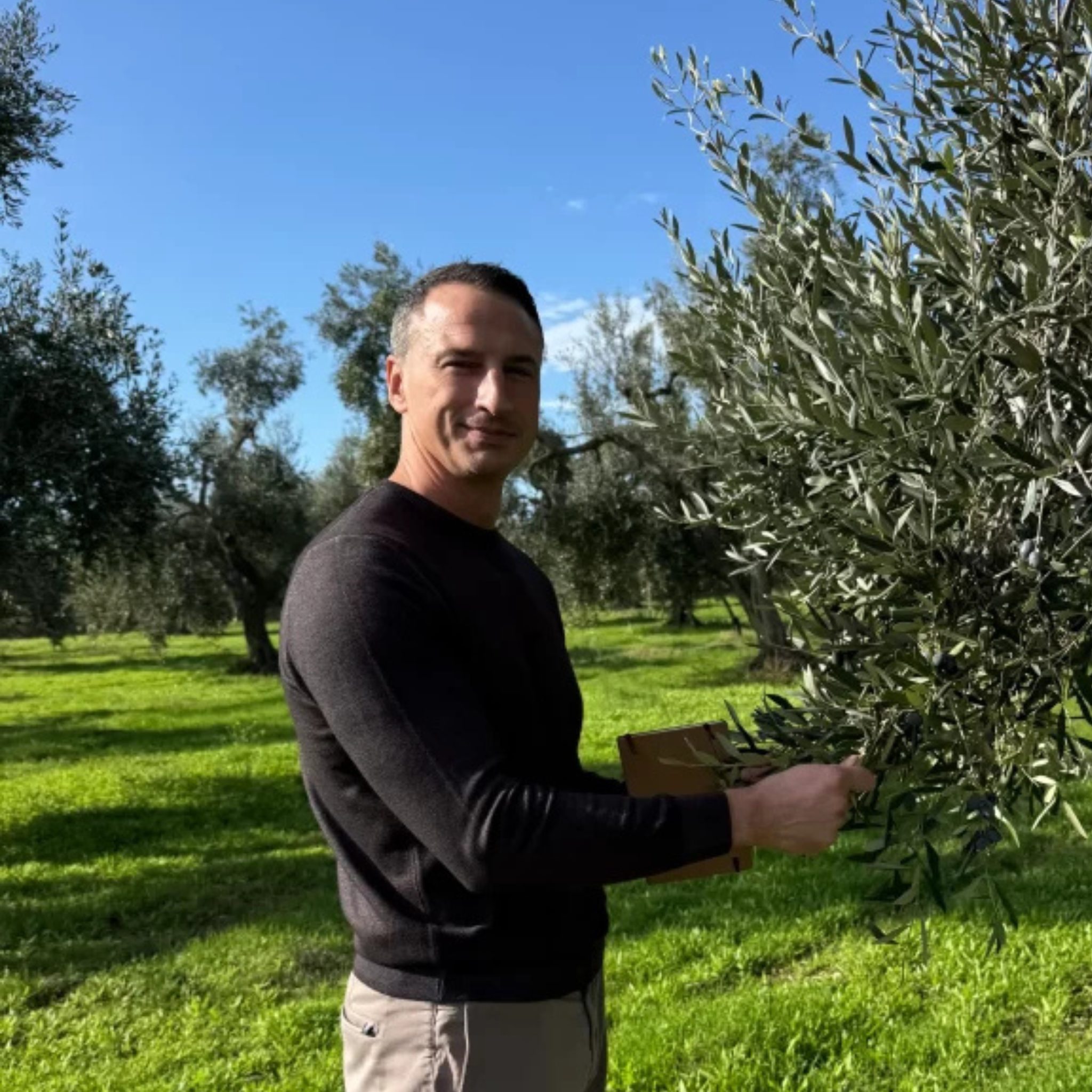
About the authorNick Ednie is the founder and curator of The Olive Library, a personal journey into the world of high-quality extra virgin olive oil. With a deep love of food, Nick travels the Mediterranean to discover and share some of the finest olive oils available. He has also deepened his expertise through study at the prestigious EVOO School. Nick’s mission is to champion heritage, quality and education in every bottle he selects and to bring the stories behind exceptional producers to life. When he’s not tasting and sourcing oils, he writes about flavour, terroir and the art of olive oil appreciation.